


Cathedral
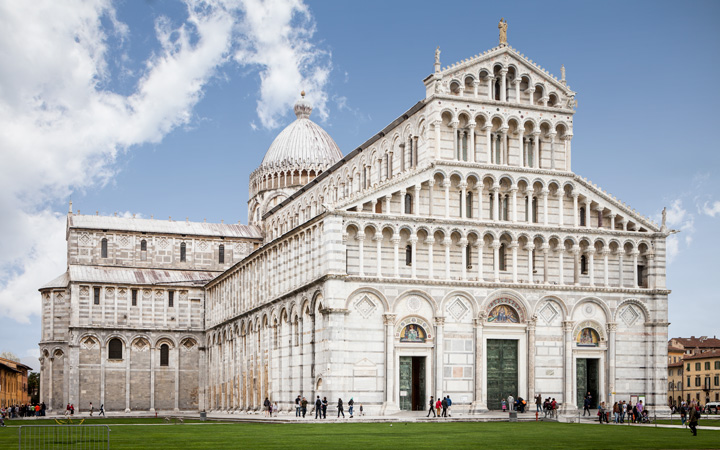
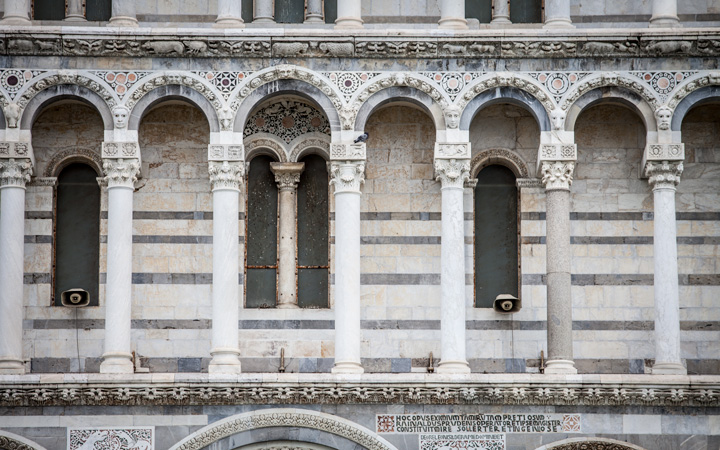
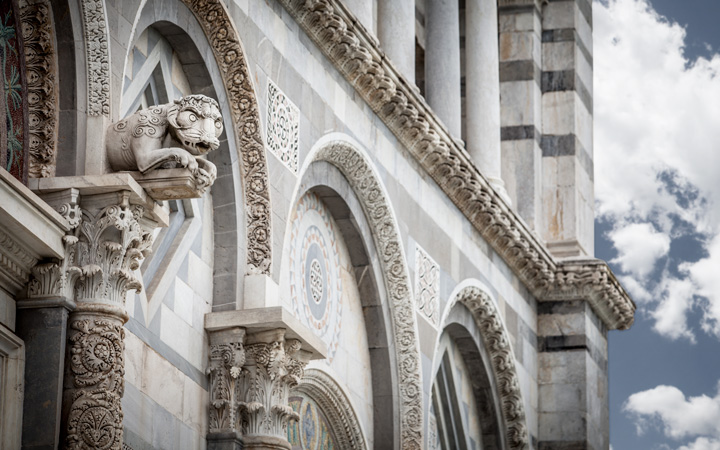
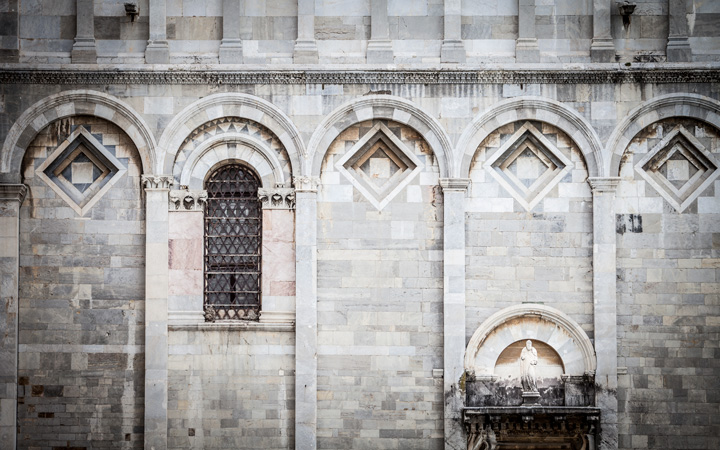
A BRIEF HISTORY
OUTSIDE
INSIDE
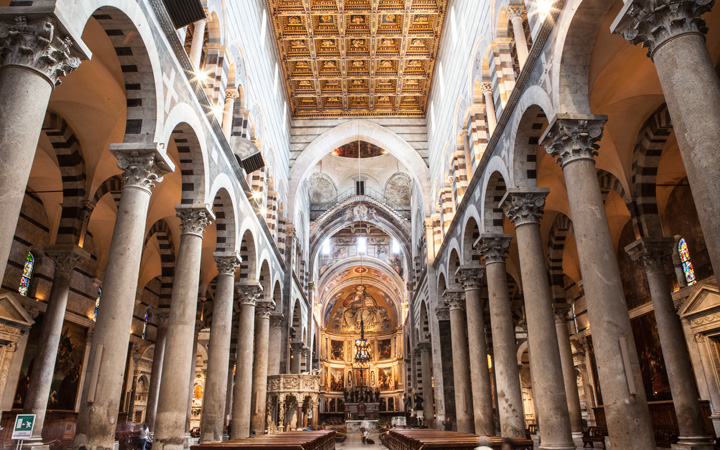
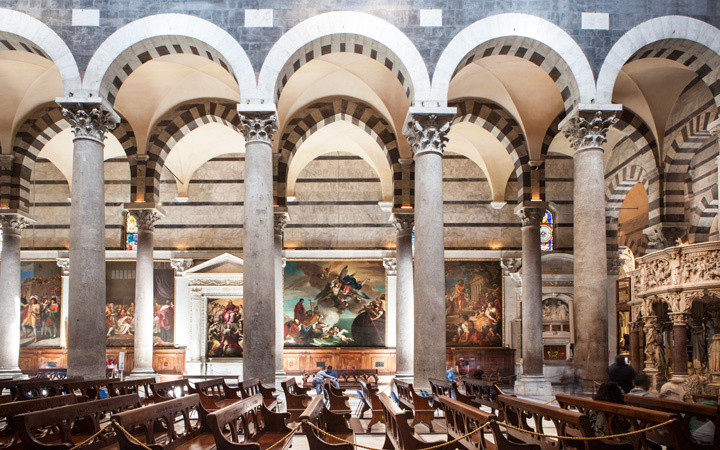
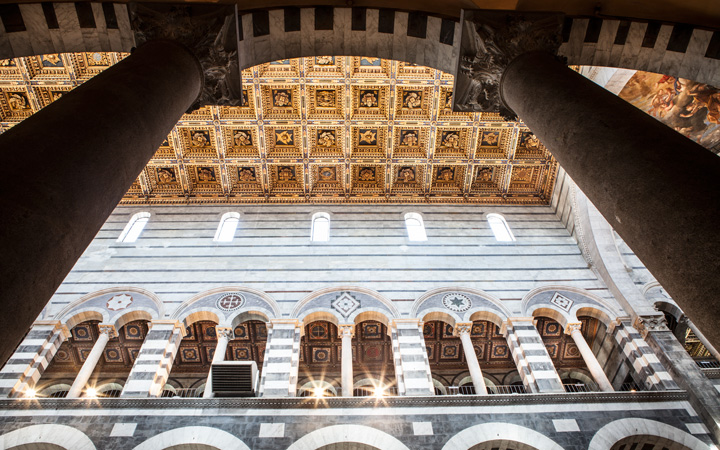
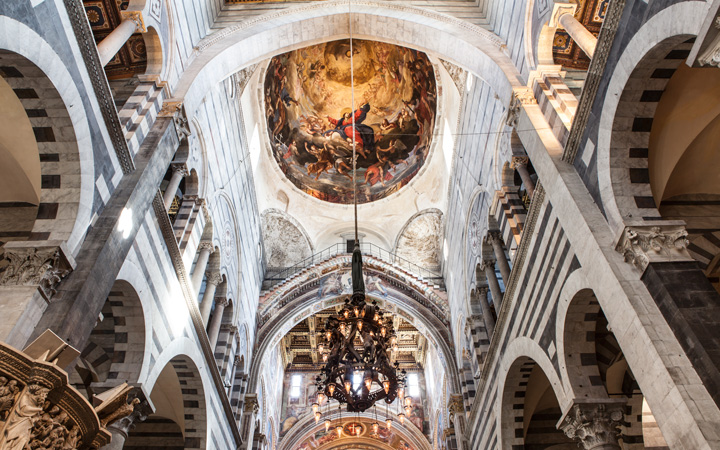
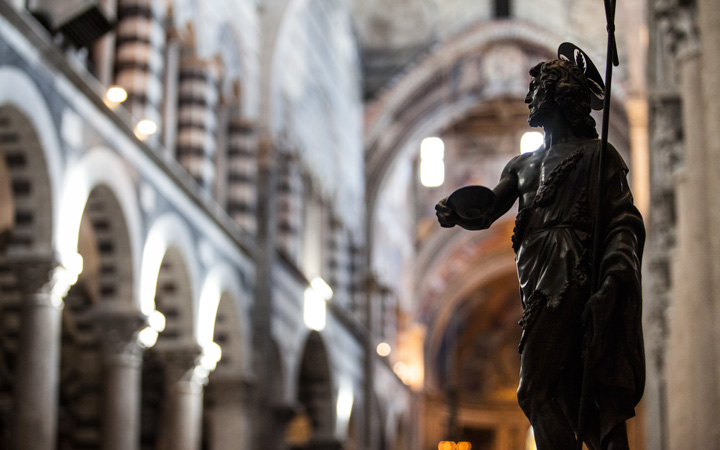
Inside, the nave is edged by two rows of monolithic columns made of granite from the Isle of Elba, flanked by four aisles separated by smaller colonnades with large womenís galleries on top, covered by cross vaults and looking out onto the nave through some double-lancet and four-lancet windows. The nave is covered by a wooden coffered ceiling that in the XVII century replaced the original exposed trusses. Rich and sumptuous are the decorations in the Cathedral of Pisa, the development of which is related to an often-troubled history marked by often-calamitous events that culminated in the fire of 1595. The only remains of the important commissions that completed the decoration of the Cathedral in the early 14th century are the mosaics on the apsidal conch – where Cimabue painted the figure of Saint John the Evangelist (1302 ca.), the new pulpit (1302-1310) by Giovanni Pisano and the disjoined sepulchral monument to Emperor Henry VII (1315).
THE RESTORATION OF THE INTERIOR DOME AND WALLS OF THE CATHEDRAL
The project started in September 2015. The completed restoration was presented on May 20, 2018, on the occasion of the Pentecost Mass celebration. The works concerned the whole test of the state of maintenance and preservation of the plastering of the dome and the side walls of the presbytery and the space under the dome. In particular, measures have been taken to consolidate the detached plastering, to restore the pictorial display on Riminaldi’s dome and on the side walls, to stop the degeneration of the plastering with faux marble painting technique decoration in the central nave, acting on one section at a time. The church returned to its maximum splendor, in time for the 900th anniversary of the Consecration (September 18th, 2018).
MASS TIMETABLE
All celebrations are in Italian
- Weekdays
h. 8:00
h. 9:00 (Morning prayer with the community) - Sundays and religious festivals
h. 8:00
h. 9:30
h. 11:00 (Convent mass with the presence of canons)
h. 12:30
h. 17:30 (Standard time)/18:00 (Daylight saving time)
- January 1st, Holy Mother of God
8:00 – 9:30 – 11:00 – 12:15 – 17:30 (officiated by the Archbishop) - January 6th, Epiphany
8:00 – 9:30 – 11:00 (officiated by the Archbishop) – 12:30 – 17:30 - February 2nd, Candlemas
17:30 (officiated by the Archbishop) - Palm Sunday
8:00 – 9:30 – 10:45 Blessing of the olive branch in the Baptistery, Procession towards the Cathedral – 11:00 Mass of the Holy Passion (officiated by the Archbishop) – 12:30 – 17:30 (Standard time)/18:00 (Daylight saving time) - Easter Triduum
Holy Thursday: 9:30 Procession towards the Cathedral, it is followed by Chrismal Mass (Blessing of the Holy Oils) – 18:00 Holy Mass to remember the Lord’s Supper (Foot washing, Repository of the Blessed Sacrament) – 21:00 Community adoration in front of the Blessed Sacrament
Holy Friday: from 8:00 to 18:00 Community adoration in front of the Blessed Sacrament – 18:00 The Celebration of the Passion of the Lord – 21:00 City penitential procession from the Chiesa del Carmine to the Cathedral
Holy Saturday: from 15:30 to 18:00 Confessions – 21:30 pm Confessions – 22:30 Solemn Easter Vigil - Easter Sunday
8:00 – 9:30 – 11:00 Pontifical Mass (officiated by the Archbishop) – 12:30 – 17:30 (Standard time)/18:00 (Daylight saving time) - Ascension
8:00 – 9:30 – 11:00 (Convent mass with the presence of canons) – 12:15 – 18:00 - Pentecostal Sunday
8:00 – 9:30 – 11:00 (officiated by the Archbishop) – 12:30 – 18:00 - Sunday of the Holy Trinity
8:00 – 9:30 – 11:00 (Convent mass with the presence of canons) – 12:15 – 18:00 - Corpus Domini
8:00 – 9:30 – 11:00 – 12:15 – 18:00 (officiated by the Archbishop, it is followed by the Eucharestic procession) - 14 15 16 June, St Rainerius Triduum
8:00 – 9:00 (Morning prayer with the community) – 9:15 – 18:00 Mass and Vespers with the community - June 17th, St Rainerius Celebration
- 8:00 – 9:30 – 11:00 (officiated by the Archbishop) – 12:30 – 18:00
- August 15th, Assumption of the Virgin Mary (to whom the Cathedral is dedicated)
8:00 – 9:30 – 11:00 (officiated by the Archbishop) – 12:30 – 18:00 - 22 23 24 October, Triduum of the Madonna di Sotto gli Organi
17:00 (Meditated Holy Rosary) – 18:00 - October 25th, Celebration of the Madonna di Sotto gli Organi
17:30 Solemn co-celebration with the Archbishop - November 1st, All Saints’ Day
8:00 – 9:15 – 11:00 (officiated by the Archbishop) – 12:30 – 17:30 - November 2nd, Commemoration of the Dead
8:00 – 10:30 (officiated by the Archbishop. At the end of the mass blessing of the tombs in the Camposanto and Cathedral) - December 8th, Solemnity of the Immaculate Conception
8:00 – 9:30 – 11:00 – 12:15 – 17:30 - December 24th, Holy Christmas Eve
8:00 – 9:00 (Morning prayer with the community) – 9:15 – 22:00 opening of the Cathedral for the Confessions – 24:00 (Solemn Mass officiated by the Archbishop) - December 25th, Holy Christmas
8:00 – 9:30 – 11:00 (Solemn Mass and Pope Blessing) – 12:30 – 17:30 - December 31st, Last day of the year
8:30 – 9:00 (Morning prayer with the community) – 17:30 (officiated by the Archbishop) and gratitude Te Deum